
South Haven Summer Salmon: When and Why the Bite Is Hot
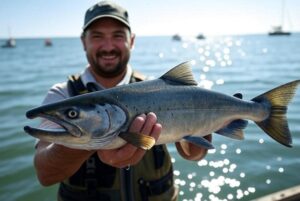 A Charter Fisherman’s Guide to Prime Salmon Fishing
Each summer, South Haven, Michigan transforms into a salmon fishing hotspot. As the sun rises over Lake Michigan, boats cast off from the docks and head into cool, deep waters where the bite is red-hot and the salmon are stacked. Whether you’re a first-time angler or a seasoned pro, there’s a reason the peak charter season with Captain Eric Schippa draws crowds in July and August—because that’s when the salmon are hitting hardest.
But what’s really behind the explosive summer salmon bite? It’s not just luck. It’s science: temperature, baitfish, and lake currents all play critical roles. In this blog post, we’ll break down why summer is the perfect time to hit the water, when the fish feed most aggressively, and how nature aligns to make South Haven’s waters one of the most productive salmon fishing destinations on Lake Michigan.
Why South Haven? A Prime Salmon Location
South Haven sits along Michigan’s “fruit belt,” but what many don’t realize is that the waters just offshore are just as fertile as the orchards inland. The town’s location on the eastern side of Lake Michigan is ideal for intercepting salmon as they follow baitfish closer to shore during the warmer months.
Charter captains like Eric Schippa, operating out of South Haven, know these waters intimately. They follow the seasonal rhythms of the lake and understand the key environmental triggers that make South Haven such a prolific fishery during the summer. While salmon can be caught in spring and fall, summer offers the perfect mix of warmth, bait abundance, and aggressive feeding behavior that gives anglers the best shot at landing that hard-fighting king salmon.
 How Water Temperature Influences Salmon Behavior
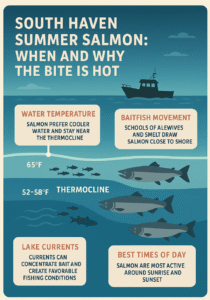
Salmon are cold-water fish. That means they don’t just swim around randomly—they’re constantly seeking out their preferred temperature range. For Chinook (King) Salmon, that sweet spot is usually around 52–58°F. And in the dynamic ecosystem of Lake Michigan, this temperature “zone” shifts throughout the year and even during the day.
The Thermocline: Salmon’s Summer Home
In early summer, as surface temperatures rise into the 60s and 70s, salmon retreat to deeper waters. That’s where the thermocline forms—a distinct boundary between warm surface water and the colder, deeper layers. In Lake Michigan, the thermocline typically sets up in June and stabilizes through July and August, often sitting around 60 to 90 feet deep off South Haven.
Captain Eric and his crew use sonar and temperature probes to track the thermocline daily. By setting lines just above or within this layer, they keep lures right in the strike zone. The salmon congregate here not just for comfort, but because this is where their food is.
The Baitfish Connection: Following the Food Chain
Salmon are apex predators, but they’re only as successful as their prey availability. During the summer, schools of alewives, smelt, and young perch—all prime forage fish—move inland in massive numbers. These baitfish also favor the thermocline and mid-depth waters, especially near underwater structure or where water temperatures suit their survival needs.
How Baitfish Drive the Bite
- Morning light: In the early morning, baitfish rise slightly higher in the water column to feed. Salmon follow them.
- Wind shifts: Strong west winds push warmer surface water eastward, forcing cold water and baitfish closer to the South Haven shoreline.
- Current breaks: When lake currents collide or change direction, bait schools often get trapped in transition zones. These are salmon buffets.
Captain Eric reads the lake like a map. If bait balls show up on sonar, or diving birds are working an area, chances are high that salmon are stacked nearby. Knowing where the food is tells you where the predators will be.
Lake Michigan Currents: The Salmon’s Superhighway
Lake Michigan doesn’t sit still. Beneath its surface, large circular currents—called gyres—move water throughout the basin. These currents carry nutrients, regulate temperature, and steer baitfish migrations.
How Currents Affect the Bite
- North-to-south flows: Bring cooler water and fresh baitfish into the South Haven region.
- Upwellings: Wind-driven events can suddenly flip warm water out and pull cold water and nutrients up from the lake bottom. These events trigger a feeding frenzy, often overnight.
- Temperature breaks: When currents and winds shift, they create “temperature lines”—sudden changes of several degrees. Salmon frequently cruise these breaks looking for confused or chilled baitfish.
Captain Eric adjusts trolling paths based on these real-time shifts. By steering along current edges and watching temperature drops, he puts baits right where big salmon are hunting.
Best Times of Day to Fish (And Why They Matter)
While salmon can be caught at any time, there are specific windows during the day when the action gets especially intense.
Morning Bite (5:30 AM to 9:00 AM)
This is prime time. Cooler surface temps overnight coax baitfish upward, and salmon go on the prowl at first light. Low sun angles help conceal the boat and trolling gear, increasing strike rates. It’s no coincidence that most of Captain Eric’s trips launch just before sunrise—it’s when fish are most active and conditions are calmest.
Evening Bite (6:00 PM to Sunset)
As the sun begins to lower, baitfish once again rise from the depths. Salmon follow them up for an evening feed. If the wind’s been favorable during the day (especially a west or northwest breeze), nearshore temps may drop slightly, pulling fish closer to shore. Evening charters can be just as productive—sometimes even better—than morning trips.
Midday Lull (11:00 AM to 3:00 PM)
During bright, warm daylight hours, the bite can slow. Salmon head deeper or become more cautious, especially if the lake is calm and sunny. Captain Eric still trolls during this time, but usually adjusts depths, lure colors, and speeds to coax bites from more reluctant fish.
Why July and August Are Peak Months
South Haven’s salmon season kicks into gear in late June, but July and August are when everything aligns:
1. Established Thermocline
The deeper water has stabilized, forming a dependable environment where salmon feel safe and active. Once the thermocline locks in, the fish pattern becomes consistent and repeatable.
2. Massive Baitfish Presence
By mid-July, the lake is teeming with alewives and smelt. These baitfish feed on zooplankton that flourish in warmer surface temps. With more food comes more salmon.
3. Bigger, More Aggressive Salmon
By July, Chinook salmon are in their third or fourth year—meaning they’re fully grown and on the move, often reaching 15–25 pounds. These are the heavy hitters. As they mature, they begin staging for fall spawning runs, and that means feeding aggressively to bulk up.
4. Ideal Weather Windows
Summers in South Haven are warm, sunny, and relatively calm. Stable weather allows for more trips to run, more fish to be caught, and better conditions for anglers of all experience levels.
5. Shoreline Convergence
West winds common in summer push warmer water offshore and pull colder water toward the Michigan coast. This temperature flip concentrates both bait and salmon closer to shore—often just 3 to 6 miles out, within easy reach of Captain Eric’s charter.
Techniques for Summer Success
Captain Eric Schippa uses a variety of proven techniques to stay on the bite during peak summer months:
1. Downriggers and Temperature Probes
Precise control over lure depth is essential. With downriggers, lures can be placed exactly at the depth where salmon are suspended—usually right above the thermocline.
2. Dipsy Divers and Planer Boards
These spread lines laterally to cover more water, mimic wounded baitfish, and avoid tangles in multi-line spreads.
3. Spoon and Flasher/Fly Combos
Color choice changes daily, but chrome, green, blue, and UV patterns are top performers in summer sun. Flashers create flash and vibration, drawing salmon in to strike the trailing fly.
4. Speed Control
Trolling speeds vary from 2.2 to 2.8 knots depending on water temperature and current. Slight speed changes often trigger bites from trailing fish.
Tips for Anglers: Make the Most of the Summer Bite
Whether this is your first salmon charter or your fiftieth, here’s how to capitalize on summer’s peak fishing season:
1. Book in Advance
July and August trips fill quickly. Call ahead to lock in your date—especially for weekends or groups.
2. Arrive Early
Salmon bite best before the sun is fully up. Be ready at the dock when Captain Eric starts the engines—usually between 5:30 and 6:00 AM.
3. Stay Flexible
Some days are hot, some are slow. Trust the captain’s adjustments. He knows when to change lures, shift locations, or alter depths to find the fish.
4. Snap That Hero Shot
Summer salmon are trophy-sized. When you land one, take the photo! Captain Eric will help you hold it properly and get the lighting just right. These are the moments you’ll remember.
5. Cook Your Catch That Night
Nothing beats grilled Lake Michigan salmon the same day it came out of the water. A bit of lemon, olive oil, and your favorite seasoning—perfection.
South Haven in Summer Is Salmon Country
There’s no better time to experience the magic of Lake Michigan salmon fishing than July and August—and no better place than the waters off South Haven. With the thermocline locked in, baitfish moving inshore, and massive salmon feeding in full force, these months offer the most consistent, high-energy fishing of the year.
Captain Eric Schippa’s years of experience, top-tier equipment, and deep knowledge of the lake make him the guide of choice for anglers looking to catch big kings in the heart of summer. Whether you’re an early riser chasing a dawn bite or just dreaming of filling your cooler with silver-scaled giants, South Haven summer salmon is the adventure you’ve been waiting for.


Comments
South Haven Summer Salmon: When and Why the Bite Is Hot — No Comments
HTML tags allowed in your comment: <a href="" title=""> <abbr title=""> <acronym title=""> <b> <blockquote cite=""> <cite> <code> <del datetime=""> <em> <i> <q cite=""> <s> <strike> <strong>